Movie Theatre Horror Case Study: Demons Use Of The Cinematic Space
* Will contain Spoilers
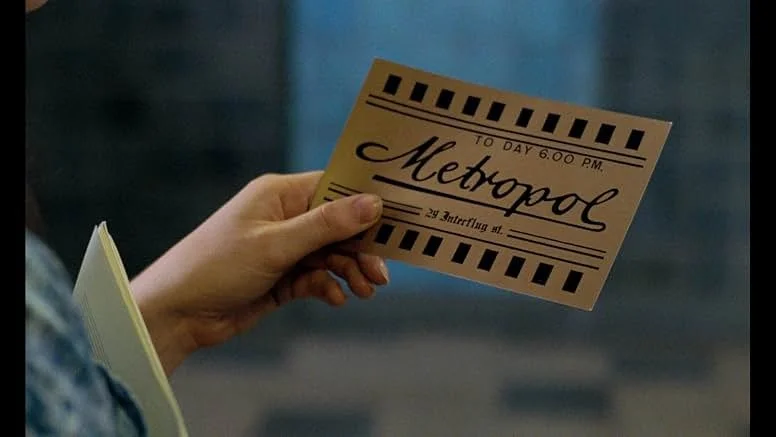
Demons: Image From IMDB
Introducing Lamberto Bava’s Demons
Lamberto Bava’s Demons is the quintessential Movie Theatre Horror film, and one that made use of both the literal and figurative Cinematic Space as movie goers battled demons under the watchful eye of the silver screen. Putting to one side the great camera work, grindhouse cinematography, and killer soundtrack, it’s a movie set in a cinema, which used every inch of the fantastic building.
It also used the familiar setting to take any narrative shortcuts the setting provided, making sure the flick moved along at a good pace. Explanations for certain things weren’t needed because it’s a film, almost within a film, set in a movie theatre. Anything was possible.
This version of Meta-Horror worked incredibly well within the confines of Demons, and enabled the more surreal aspects of Italian Exploitation to shine. They could concentrate on the next scare or gross-out gory effect rather than being caught up in numbing exposition. We don’t need to know the complete history of the mask, the Demons, or why any of this is taking place, just get to the gore… and they did. That’s not to say there wasn’t some resemblance of a story somewhere, but, you know, it’s a cult classic Italian exploitation flick, you ain’t getting Shakespeare.
Demons unintentionally carved out the rules for Movie Theatre Horror. It’s hard to argue against the films lasting influence as it inspired any Movie Theatre Horror that came after. I’ve seen and read countless Demons clones or homages over the years, and enjoyed most of them, but it’s clear were their influences originated. So, it’s time to examine that original, and take a look at how Demons fully utilises the Cinematic Space within the subgenre.
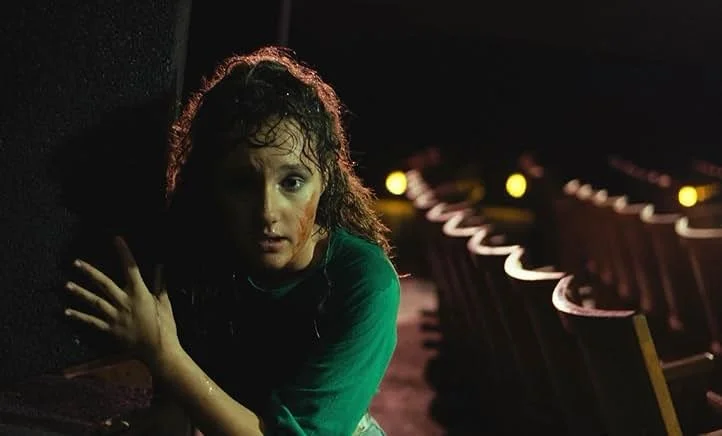
Demons: Image From IMDB
The Movie Theatre Setting
Setting Up The Haunted House
Movie Theatre Horror is at its best when the cinema becomes a character within the narrative. As a setting it’s a very fun location, but that fun can exponentially rise when we feel the danger within the walls, and wonder if the building has a sinister mind of its own. Then we start to examine everything about the theatre. Survey the exterior. Does it look like a death trap? Is there something unnerving about the marquee? Is the shape of the building peculiar? What about the position of the windows? Are we getting a haunted house vibe?
What about the staff inside the potentially magical and dangerous building? Do they look suspicious? (Like the female usher in Demons who turned out to be an innocent victim but you suspect her the whole time) Could one of them be a killer? Or responsible for what’s about to happen? We examine the movie posters along the wall with a keen eye. Are they giving us any clues? Or simply telling us about other fantastic films we should check out? Easter egg or plot point?
And the layout of the auditorium itself. Is it conducive to horror? Are there shadows lurking in every corners? Do those thick red curtains feel like they’ve seen things? Are the exits clearly marked, or even unlocked? You know damn well they’re going to be locked.
The audience also often offers its own clue. The Movie Theatre in Demons feels sinister enough before you begin to examine the audience as they wander through the lobby. The overly obnoxious Pimp, and his whores. The blind man (never trust a blind man in a horror movie, although this one is actually okay) The arguing couples. Punks. Horny teens. It all spells horror. It all adds to that haunted house atmosphere, and the vibe a cinema within a horror movie can give.
Haunted Houses have been a part of Horror forever, and combining/morphing them with a Movie Theatre feels right. Outside of the bland clean modern multiplex’s cinema’s are often old buildings with crumblings features, stuck in a strange part of town. The buildings tend to naturally have history, often repurposed or multi-owned down the years. That history fits into the Haunted House playbook, but Movie Theatres don’t have to apply the same origin logic.
You can’t have a Haunted House that’s a modern build with no previous drama. It has to be a murder home, or have been built on an Indian burial ground or some other bullshit. But no such location devices are needed within Movie Theatre Horror because the danger can come from any prop, audience member, or mysterious film reel. But then combined with an old building or dodgy area, that’s when you give the Movie Theatre the complete Haunted House experience without the need of the Haunted House origin tropes. It’s a potent mixture.
The Theatre Is The Prime Suspect
When the shit hits the fan in Demons and the audience begin to turn after the first bloodthirsty bite the Movie Theatre itself is instantly a suspect, and the buildings doesn’t try to hide its malevolent involvement. The breakout may have occurred due to a cut from an ancient super cool looking bullshit Nostradamus demon mask, but the building is undoubtably haunted, and probably responsible for the whole mess.
The entrance and exits no longer exist as the audience tries to escape, no doubt walled up by the Movie Theatre the moment the film started. The supernatural within Demons doesn’t just extend to the curse of the demon mask and Nostradamus onscreen resting place, its also within the brick and mortar of building itself. Whether the Movie Theatre set this whole thing up, or if alternatively there’s some mastermind behind the outbreak doesn’t matter, the cinema is claiming its victims no matter who’s to blame.
Because of their conscious (or unconscious) suspicion of the building, the Movie Theatre is the first thing the audience fights back against. They attack the walls trying to find a way out. Rip up the seats for protection. Raid the projection room in the hope that shutting off the movie will stop whatever the fuck is happening (when really as the onscreen movie was mimicking what was occurring in the cinema they might have been better off letting it play and watching for clues)
Everything within the Movie Theatre becomes a battlefield or a flashpoint. The demonic silver mask in the lobby holds the key to unleashing the power of the Demons. The woman’s toilet is where the hooker’s face starts to burst and she re-emerges as a Demon. The back row isn’t just for making out, it’s also an early kill spot thanks to its inconspicuous position. As is the doorway. The teens creep through the lobby trying to avoid the Demons. They find other rooms within the buildings walls during their attempted escape too, which only succeeds in making the cinema feel even more disturbing.
Behind and in front of the screen is as dangerous as what’s onscreen. When the other hooker collapses in front of the cinema screen it’s like the story has literally burst from the silver screen and onto the sticky floor. The initial big encounter erupts in the auditorium. The cinema is used both as a weapon, and for protection. Seats are ripped from the floor and used against the attacking Demons. The bottom floor becomes a pit. The upper seating area a temporary sanctuary. The Movie Theatre is a war zone, and I can’t help but think the building is enjoying the death and chaos.
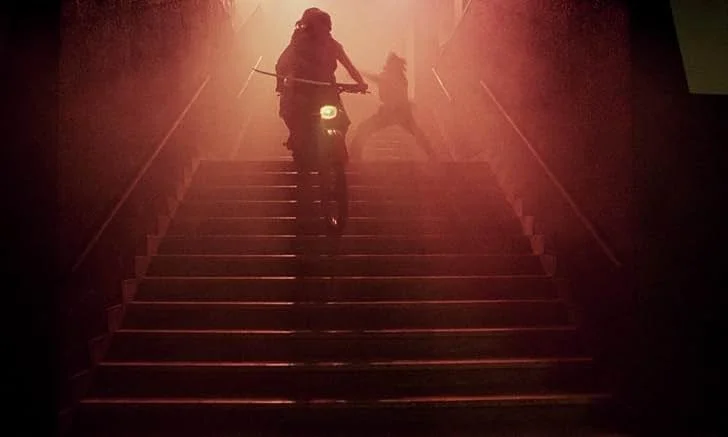
Image From IMDB
The Cinematic Space
The other side of Demons fantastic use of Cinematic Space is what’s happening on the screen within the screen. The film playing onscreen within the cinema is always a big part of the Movie Theatre Horror trope. Some use the film within a film to set the tone, give a sense of foreboding danger. Others use the movie within the movie as an integral part of the complete story. Demons falls someone in the middle.
In Demons, the film playing on screen sets up what’s about to happen to the cinema audience watching it. The onlooking crowd watches as a bunch of teens explore a cemetery and eventually come across the grave of Nostradamus. Near his grave is a warning, and a mask… the same mask that was in the Movie Theatre lobby, and which cut the hooker.
When one of the characters within the movie they’re watching also cuts himself on the onscreen version of the mask (which in all likelihood is the same mask, but its never explicitly said because it’s Italian Exploitation and Movie Theatre Horror) it’s like an invisible connection has been made between the film world and the ‘real world.’ The mask in the movie theatre lobby now has full permission to act.
The events on screen now match those that are taking place in the cinema as the teens within the film are attacked by Demons that used to be their friends, much like the ones killing the audience. I personally love this sort of mirroring. It’s a fantastic use of the film within the film idea.
The interesting thing that Demons does which makes it so different to others of its kind is it doesn’t continue with the mirroring trope once everything is set in motion. It kills the movie within a movie off, rather than using it to further the ‘real world’ plot. The audience acts like a rampaging mob and attacks the rather futuristic looking projection before the movie has been able to give them any more insight into what the hell is happening, or how to stop it. Could breaking the mask have ended the curse? We’ll never know, the mirror has been shattered.
This is especially clever in terms of writing for several reasons:
We, as the audience, are no longer privy to what might happen next. Our guide has been removed, and all bets are now off. Alongside the same lines, as mentioned, the characters within the real world have destroyed their only exposition. The film may have been able to explain more about who and what the Demons are. Where they came from. And most importantly, how to stop the hideous fuckers. The audiences rash decision could have cost them dearly.
Interestingly, now that the film within the film is no longer helping the cinema goers the movie decides that no one deserves to know anymore about the Demons. If the characters within the film are no longer getting any exposition due to their behaviour, nor are the we as the audience. It’s a very clever version of Meta-Cinema that I will give them credit for purposefully doing, even if I’m never quite sure with Italian Exploitation flicks.
There’s always a lot of fun to be had when the onscreen movie echoes the movie we as the audience are watching. We can see if the heroes of the film make the same mistakes as what they’ve been watching. Whether the exact same events occur. I can’t help but wonder how much of what took place in the Movie Theatre after the projector was destroyed echoed what took place in the movie the audience was watching.
Did the heroes in that movie end up on the back of a motor bike with a sword? Is that why those particular props were in the lobby to begin with? Or, did the audience within Demons branch off in a completely different direction to the film they’d been watching. Left to their own devices, did they take a completely different route? Did the movie within a movie have a happy or better ending than the nightmare the audience was left with?
They’ll never know, and nor we will, because that’s the beauty of fully utilising the Creative Space with Movie Theatre Horror. Ironically, when you set your horror story in a Movie Theatre, movie logic can be damned.