Movie Theatre Horror Case Study: Slasher’s In The Aisles
*Will Contain Spoilers
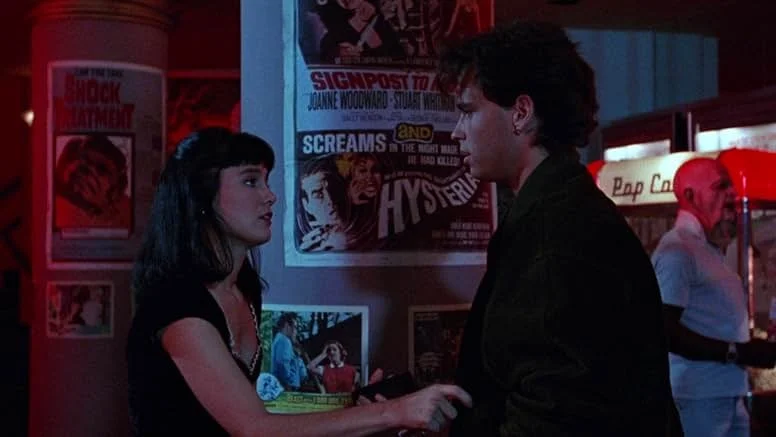
Popcorn: Image From IMDB
Subgenre Of A Subgenre
Movie Theatre Horror, or just the Movie Theatre setting in general, has been home to a number of incredible ideas and scenes over the years. From the on screen fantasies of Keaton’s Sherlock Jr, to Tom Baxter stepping off the screen and shocking the audience in Woody Allen’s beautifully tragic love letter to cinema, The Purple Rose of Cairo. We’ve seen a kid entering the world of the Last Action Hero, and teens enjoying gimmick B-movies during the Cuban missile crisis in Joe Dante’s under appreciated Matinee. We’ve even had a Gremlins a sing-alongs, “They’re watching Snow White, and they love it.”
There’s a lot of room and manoeuvrability within the framework of a Movie Theatre setting, and telling a story within a story. It even opens up the possibility of a subgenre within a subgenre (Still following) From Silent Movie Detective Films to period Rom-Com’s. From zany Action Flicks to Italian Exploitation. There’s been an endless amount of creative ideas within the setting, and this includes the introduction of Slashers!
Both Jonathan Janz’s Witching Hour Theatre novella and Mark Herrier’s movie Popcorn focus on the idea of a Slasher within the hallowed cinematic walls. Not one who’s climbed down from the silver screen, or has been created through some mystic going-ons, but one who’s stalking and killing within the setting. Real life flesh and blood.
They may not necessarily have any relationship with the films playing on screen but the venue plays a vital role. It sets the tone. The atmosphere and familiarity give the story life. The cinema and the films showing can establish the lore of the Slasher without having to be directly related to them. The building offers plenty of dark corners for the killer to lurk too. Slashers and Movie Theatres feel like a perfect match.
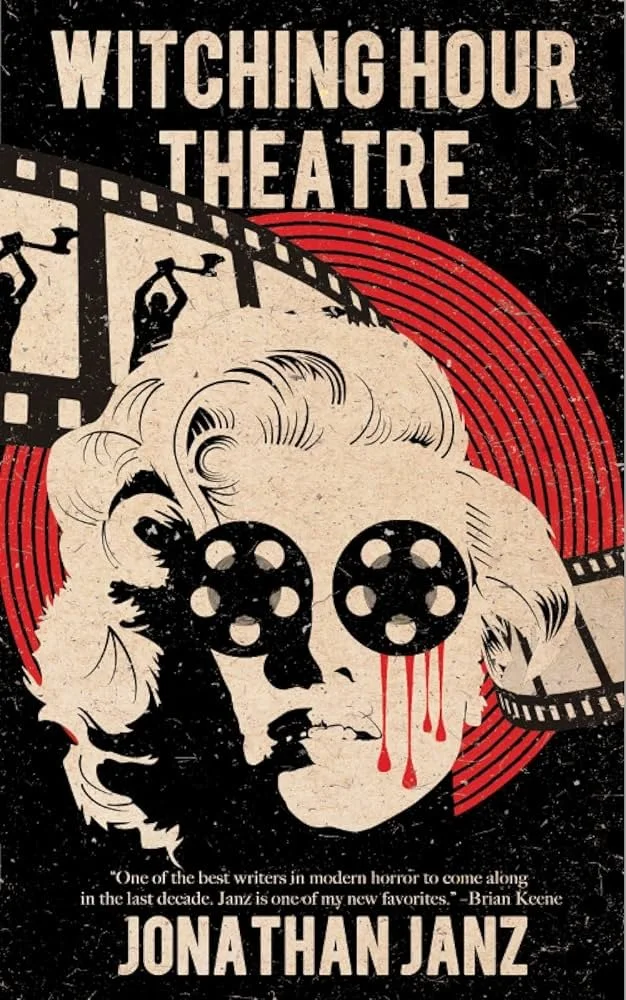
Witching Hour Theatre by Jonathan Janz
Graphic Slashers
In Jonathan Janz’s novella Witching Hour Theatre the Slashers aren’t related to any of the three movies on screen, but the individual movies are used to establish the atmosphere and violence which will proceed. The first movie, a fictitious movie called Death Mountain, does however have a killer which somewhat resembles the Slasher’s in the cinema. They’re not the same, but they do share the same weapon of choice and fondness for violence.
The second movie is the classic, The Omen. One of the scenes highlighted is the decapitation scene which definitely plays a role in the story we’re reading, alongside the constant building of dread The Omen is famous for. Finally, there’s the other fictitious movie, Veil of the White Temptress. This film shocks Larry as it takes a cruder, more graphic turn, foreshadowing the tonal change in book we’re reading, and the night Larry is about to have. He wanted to enjoy a triple horror bill at his favourite cinema, but instead, became embroiled in his own real life Slasher flick, with extra blood and gore.
The commentary Larry gives us through-out the Horror marathon, together with his obvious love of cinema, informs us he knows the rules of horror. So, when the ‘real world’ Slasher plot is revealed, we know Larry has an understanding of what to do in the dire situation. However, that pre-emptied knowledge is thrown out the window when the life of his crush, Nichole, is at stake (isn’t that always the way) Larry goes from being someone trying to survive a Slasher, to being the hero of a Slasher flick. A stand-in for the final girl.
The Movie Theatre setting is put to use straight away in the Novella. Larry’s journey from marquee to confectionary stand to seat introduces us to the geography of the location, which all becomes significant later. We also learn important details, like why the emergency exits are locked, and that there’s two screens. Larry observation of the other patrons, and his own flirtatious encounters with Nichole, also allow us to learn about the other characters within the story too.
With the Movie Theatre’s details established, the eeriness of the setting is then accentuated by the mysterious man at the screening who always appears shrouded in darkness, rather from any aspect of the building itself. Once the rest of the audience has bailed on the late night marathon and just the mysterious figure and Larry remain, we then find out just how creepy and sadistic he is.
All the things which could/would normally happen in a dark woods or raunchy campsite by a lake are easily replicated in the cinema, with the added bonus of similar action taking place on the screen at the same time. We read about Larry fumbling around in the darkness, unable to get through the locked doors. He goes the wrong way. Is mercilessly stalked. Instead of discovering the bodies in a ditch, or some abandoned cabin, the bloody pile of mangled headless corpses are discovered in the hallway of the other screen. All the classic and wonderful Slasher tropes are played out in a location which feels tailor made for them. Really is a great match.
And it’s not just the victim who gets to relive the greatest hits Slasher tropes in the cinema, the killer does to. The Slasher can hide in the darkened corners under the silver screen rather than silver moon. They chase their victims over seats instead of something more woody. They can still sneak up on them as the hallways replace the entanglement of trees.
Rather than spikes or tree stumps decapitated heads are stuck on popcorn tubs in the front row, left watching The Omen rather than being observed by any lingering wildlife. The Slasher remains master of their environment, but with the added symbolism as the movies are where Slashers really come to life.
When Larry finally escapes he’s forced to go back inside and take part in the final fight. A change of settings doesn’t mean a change in the Slasher rules. It’s something our Final Girl normally has to come to terms with, but tonights it’s Larry’s turn.
And thanks to those subgenre rules Larry narrowly avoids death repeatedly, beating the odds time after time just like the survivor in any slasher would. It could be seen as repetitive, or even seen as lazy writing, but this isn’t a Crime Thriller or Noir, it’s a Slasher! This is what must happen. I don’t make the subgenre rules, but I do absolutely love them, and fully endorse them. Jonathan Janz’s understands that while the location may have changed, the subgenre hasn’t.
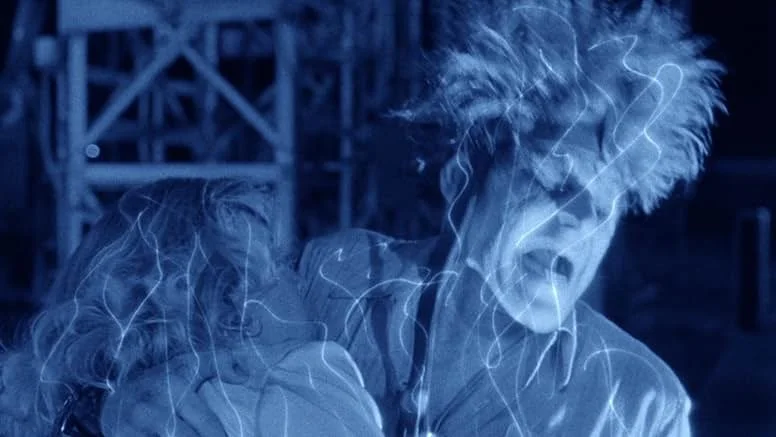
Popcorn: Image From IMDB
Gimmick Slasher
In Mark Herrier’s movie Popcorn a similar approach is taken using three movies within the story, but this time round they’re gimmick movies. Rather than using the films to create a tense vibe or atmosphere like in Witching Hour Theatre, the films foreshadow certain deaths are teen heroes will suffer when they’re killed off one-by-one during the horror festival.
The first movie is Mosquito! A 3D film featuring a giant mosquito our heroes have recreated in the cinema. The model mosquito is used by the mysterious would be killer Lanyard Gates to kill the teens Professor. The on-screen action mimicked in the ‘real world,’ and complimented with laughs and cheers from the watching audience who are having a whale of a time.
As a quick side note this audience interaction brings up one of the more interesting key points about Popcorn: unlike Witching Hour Theatre or most other Movie Theatre Horrors the watching audience within the cinema aren’t in any immediate danger. They’re not the target of the crazed Slasher. In fact, they more closely resemble an instrument for the killer to use, rather than victims for them to dispatch.
The second movie is The Attack of the Amazing Electrified Man. The gimmick for this fictional B-Movie is shocking the audience with buzzers placed under their seats. (Getting massive Matinee flashbacks with John Goodman’s wonderful character)
Naturally, the next teen’s death is through electrocution. As he dies the gimmick shocks within the audience feel more dangerous because of what’s happening to him, but again, they’re oddly not in any danger, even if it feels like they are. This is the power of the setting. The relationship between what they’re watching on screen, and what we are witnessing in their real world. The Movie Theatre setting blurs the lines in a way other settings can’t.
It’s interesting to see this brief foreshadowing of each teens death. The setup and pay off are never to far apart in Popcorn. Normally, this is a bad thing in my opinion, the two should have room to breath. Build anticipation. But this movie handles it well. I think, in part, it’s because the audience within the film are having so much fun. It keeps an energy going throughout, and gives each gimmick death more relevance and power.
It’s a similar structure to something like Final Destination, but without any twist in the death. In Popcorn they are going to die exactly how their death has been setup. And it’s going to happen immediately after that setup. Yet, in spite of its obviousness, it’s going to be enjoyable. This structure is also what’s largely happens in the gimmick movies they’re watching, which only adds to the Movie Theatre Horror trope and fun of the film.
The final movie which is unrelated to the killer, but will show how he’s going to kill next, is The Stench. And you guessed it, Aroma-Rama. The latest victim is killed by gas, while the audience watching laughs at the horrible smells whiffing through the cinema related to the movie.
The Slasher at this point becomes known to our final girl, and his motives become somewhat clearer. The make believe world set up though the gimmick movies has somewhat ended, despite the Stench still playing. With no more gimmick movies, we don’t know how the next kill will come.
It gets a little convoluted and silly towards the end, but within keeping of the movie, and probably even more in keeping with the B-Movie gimmick films they’ve been watching. Plus, all the Phantom of the Opera stuff works within the Movie Theatre setting.
It’s a lighter movie than the previous novella, but Popcorn shows a different approach to the Slasher within the Movie Theatre idea. The killer mimicking the kills they’re seeing onscreen is a lot of fun, and fits the subgenre beautifully.
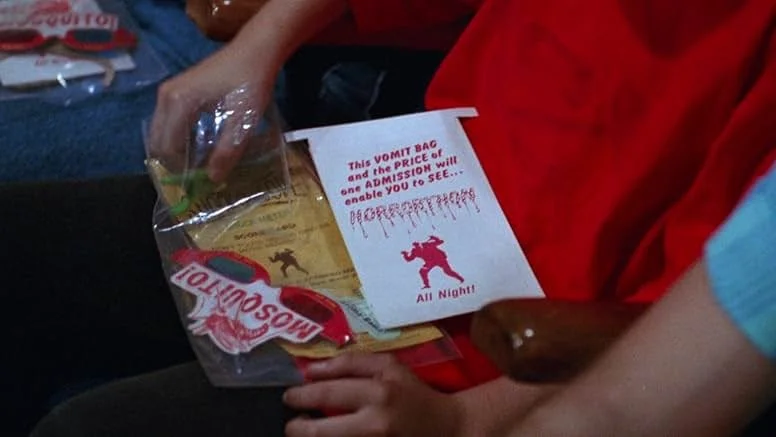
Popcorn: Image From IMDB
Made For Each Other
Slashers are made for the cinema. It’s one of my favourite subgenres, and one that I’ll cover multiple times over the next few years in as many ways as I can think of. But, with these two examples, we get to see how creative the Movie Theatre Horror space can be for the killing machines. How the films on screen within Movie Theatre Horror can be used to either aid the Slashers murders, or set the tone of the story. How they can use the dark space and shadows of a cinema to stalk their prey, or hide the bodies once they start to pile up.
Given the rise and rich history of Slashers, by their very nature Movie Theatres and Slashers have a symbiotic relationship. They’re not dependant on each other, but they sure do thrive when they’re together. So it’s no surprise that Slashers fit perfectly within Movie Theatre Horror