Neo-Noir Case Study: Neo-Noir Femme Fatales Through The Lens of David Lynch
*Will contain Spoilers.
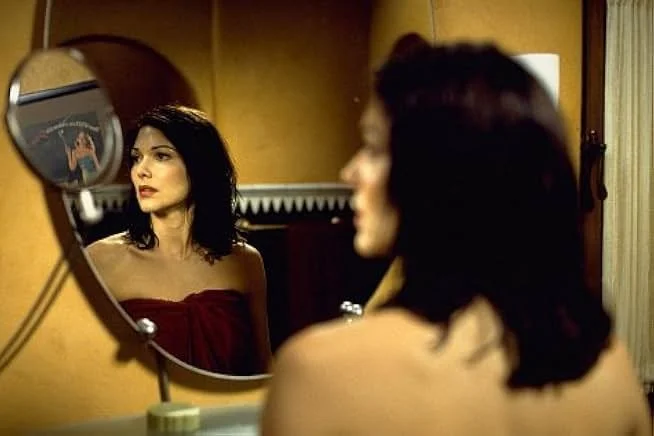
Mulholland Drive: Image From IMDB
Introducing The Neo Noir Femme Fatale
One of the biggest evolutions from Film Noir to Neo-Noir is the use of the Femme Fatale character. Under their previous guise they were still sexy, manipulative, and dangerous, but within the unrestricted rules of Neo-Noir everything can be cranked up to eleven. They can be hyper-sexualised in ways the Hay’s Code would never have approved of. Can manipulate a wider range of anti-heroes. Their roles are more diverse, no longer simply being the bane of the anti-heroes existence, although that is still often the case. Their perceived victimhood can take on more forms with their ability to fight back. They no longer need to be brought to any kind of justice either. Much like the new anti-hero, they can get away with murder.
There’s a lot I could talk about within David Lynch’s Lost Highway and Mulholland Drive but what I want to focus on is the roles of the Femme Fatales within these movies. Obviously as it’s Lynch these aren’t conventional Neo-Noir’s (if such a thing truly exists) and the Femme Fatale narrative isn’t as linear and clear as other movies I could use as examples (say Atomic Blonde or Bound) But, Lynch does play with a lot of the more modern conventions of the Neo-Noir Femme Fatale and produces a couple of excellent examples to work through.
Rather than switching between the two films I’ll talk about them together as we go through those modern traits: The Sexuality of the Femme Fatale. The Manipulation and Control they have. Their Style, which I think largely sticks to the old-school ways. And, the danger they pose, alongside the perceived danger they are sometimes presented in.
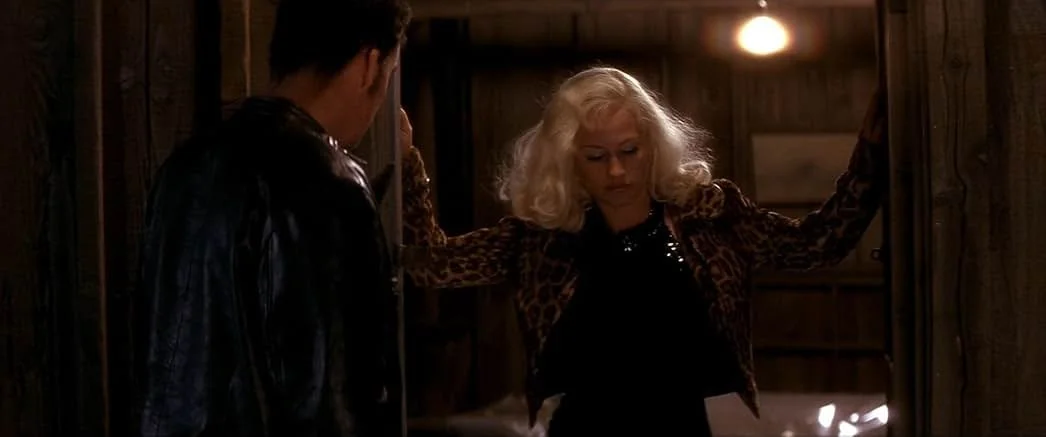
Lost Highway: Image From IMDB
Sexuality Of A Neo-Noir Femme Fatale
Lost Highway
Sexuality has always been the Femme Fatales biggest weapon. Their ability to catch the hero of the story in a trance. It often triggers all their other powers. This sexuality use to always be introduced onto the screen in a dramatic way: a sultry walk down a spiralling staircase. Opening a door while the camera lingers on their often angelic face and full lips in beautiful soft lighting long before the shadows are introduced. The camera would hold while both we, and the unsuspecting male lead, took in what stunning creatures these woman were, long before they realised the extent of the danger they were already in.
The modern Femme Fatale has moved on from such grand introductions. They often tend to grow into the role of dangerous and manipulative. Their beauty becomes more apparent as the narrative moves forward. We don’t need that immediate moment anymore. We still get it from time-to-time, as seen with Kim Basinger’s reveal in L.A Confidential, but we can also see in Lynch’s Neo-Noir’s how that sexuality can be exhibited over time instead.
In Lost Highway the first iteration of Patricia Arquette, Renee, is seen lurking in the background in murky lighting. Our hero almost seems disinterested in her. When she strips naked for the first time Fred (Bill Pullman) wants her, but he can’t. It’s a blow to the Femme Fatale’s ego and pride. She seems powerless.
But, a Femme Fatale is never powerless. Later, when he sees her talking to another man, he becomes instantly jealous. Her power grows, as does her sexuality. Suddenly she’s in dresses and heels. No longer lit in a gloomy way. Looking sexy and alluring. He wants her again.
However, as soon as she’s powered up and looking like a Femme Fatale his life goes to shit and he ends up killing her over an affair which leads him to death row (Her life obviously took a bad turn too) As a Femme Fatale there’s little we’ve seen her do wrong, nothing that would warrant death, but again, this is a Lynch film so the narrative isn’t over yet.
The second iteration of Patricia Arquette, Alice, is more conventional in her Femme Fatale ways, but is an updated version. She’s shot to look heavenly from the beginning. Sexy from the moment she appears on screen. And is naked in no time. She’s manipulating Pete almost instantly, and in classic Noir fashion he’s too infatuated to realise. Every scene she looks more and more beautiful until we reach a point where she gets what she wants.
That’s the moment she tells him he can ‘never have her.’ She ate him up and swallowed him whole, and he was utterly helpless. And honestly, who can blame the guy! He quite literally killed for her because every move she made led him in that direction, and every move was supported by the promise of having her.
He threw away an already good relationship. His future, now that he’s fucking a gangster’s girl. And potentially the rest of his free life after committing murder. It’s no coincidence that at the moment she crushes him she’s naked and shot with a spot light literally on her in the form of the car headlights. He’s caught like a deer in the headlights, while she looks like a slutty angel gone full devil. He never stood a chance, and she got everything she needed from him.
Mulholland Drive
Lynch took a similar approach in Mulholland Drive. While both Betty (Naomi Watts) and Rita (Laura Harring) look great to begin with, their beauty only grows as their danger intensifies. Their sexuality is increased as the mystery is slowly resolved and their ambitions becoming clearer.
At the beginning neither character is ‘acting sexy.’ Betty is cute and friendly, while Rita, despite being half naked during the second part of her introduction, is more lost and wide-eyed than seductive as she tries to discover who she was and get over the car crash she was involved in.
The turning point is when we discover Betty can be sexy. After that, she doesn’t look back. Her audition scene blows everyone’s mind, and suddenly all eyes and attention are on her. Every guy in the room is in love with her, and the girls want her on their side. Betty discovers the power of her sexuality in that scene. That it can make all her wildest dreams can true. It can get her whoever she wants. Within the narrative it isn’t long after this that the story begins to unravel.
That’s because this reinvigorated sexuality is a lie. And this is where a master like Lynch almost plays the trope against itself. In the, shall we say parallel version of these characters when Betty is Diane, she doesn’t have that sexuality. Her teeth don’t look as great. Her hair is dirty. She doesn’t have the confidence. And all eyes are on her friend Camilla, Rita’s alter ego. Diane/Betty sees firsthand what beauty can get as she watches her friend and rival. Camilla is the Femme Fatale in her eyes. Getting everything she wants. Love. The lead Roles. The adulation and attention.
It’s no wonder that in Betty/Dianes alternate version Rita/Camilla is so codependent on her. That Betty is presented as the more sexual of the two. Betty/Diane knows in this town being sexy and seductive gets you everything! Narratively speaking, Camilla is literally given just that as the director is told ‘this is the girl,’ with his life at stake if he doesn’t choose her.
Sexuality is the key for Femme Fatales. It was during the Film Noir days, and Lynch shows in modern Neo-Noir’s that their sexuality holds even more power in the modern equivalent. He quite literally doubled it in both films.
The added bonus of nudity gives them even more power over the male characters (and female characters in Mulholland Drive) as well as the audience. We’re disarmed by their beauty, even though we know the danger these characters pose. Pete has a loving girlfriend in Lost Highway, but what’s he to do when the mob bosses girlfriend throws herself at him? Even if he did know it was a trap, would he have had the power to act any differently?
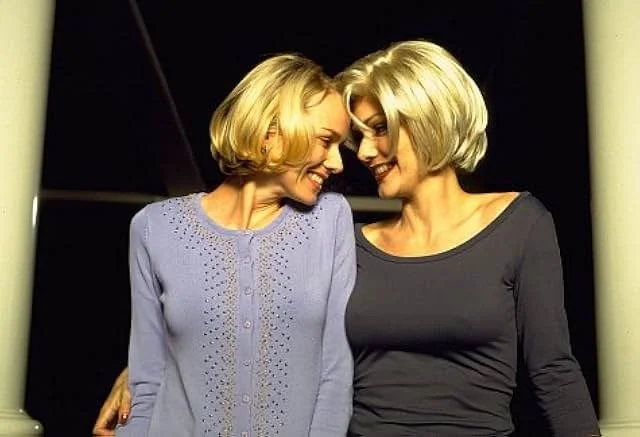
Mulholland Drive: Image From IMDB
Control and Manipulation
Alongside sexuality (and most likely because of it) Femme Fatale’s often have a great deal of control over the characters around them. Be it their husbands, potential suiters (is that still a phrase?) Hard-boiled detectives, or other woman. And, with control, comes manipulation. If there’s one thing a good Femme Fatale knows how to do, it’s manipulate.
Alice clearly knows what she wants from the beginning (well, mid-point of Lost Highway) she wants to use Pete as a way out. Manipulate him into helping her get what she needs. In her eyes there’s no other way, and she doesn’t give a fuck about the collateral damage. And the plans goes without a hitch. She gets whatever it is she’s after (it’s a little vague) from the douchey friend who Pete kills, and then sets Pete up to take the fall from either the police, or Eddy, her violent enraged gangster boyfriend.
The only thing she didn’t account for in her plan was Lynch’s bizarre parallel universe wormhole bullshit, but who could blame her for that. She used her brains alongside her feminine wiles and would have got everything she wanted, if she hadn’t disappeared.
Similarly in Mulholland drive Betty/Diane manipulated the entire narrative to get what she wanted. She got the killer apartment rather than the crummy one by being the niece of a Hollywood Player. Got the roles she wanted by being a fantastic actress and kisser. Got the girl she wanted by being irresistible and making sure Rita/Camilla was fully dependent on her. She achieved it all by being what she needed to be in each situation. We thought we knew the true sweet Betty early on, but that was just a ruse. She was a chameleon like all Femme Fatales.
But her plan broke down because it wasn’t real. It broke down because while she could pretend to be these things to control and manipulate and get everything she ever wanted, she never was any of them. She wanted to be the Femme Fatale, but lacked the qualities needed within the role.
It could be argued Camilla was all the things Betty/Diane wanted to be. She had the fame and fortune. The high-profile loving relationship. The lead roles and talent. And because Betty couldn’t have it for real, she decided to metaphorically burn the whole fucking house down.
The manipulation normally works because of a mixture of the Femme Fatales sexuality and intelligence. Her ability to get what she wants by manoeuvring those around her. Betty failed because that ability was an illusion. Unfortunately, it’s probably why she failed at a career level too within the ‘real world.’ It’s a brutal truth for the character who wanted to see herself as more.
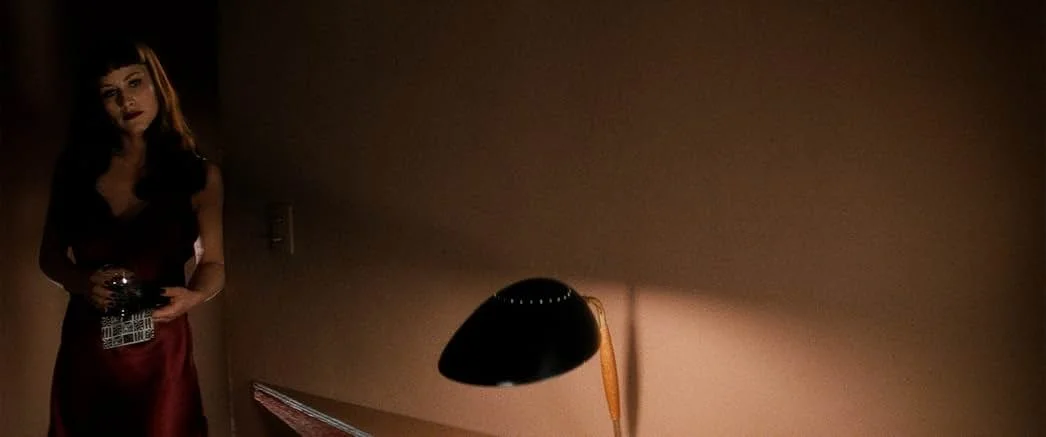
Lost Highway: Image From IMDB
Style and Victimhood
Style
Touching upon style quickly I like how Lynch kept a lot of it similar to the old Film Noirs, but only in the fantasised (fetishised) versions. In Lost Highway Alice looked like she walked right out of a crime novel, and was shot like it too. She was an idealised version. The blond fluffy hair. Made up face. Perky tits. Accessible. What man could say no?
Within the context of the narrative she could be considered Fred’s fantasy version of his wife Renee who was a lot more dressed down compared to Alice, despite them being essentially the same person. Alice was the poster everyone had up on her wall.
In Mulholland Drive Rita was dressed in the sexy black dress from the get go. Had the lipstick and clutch purse. The style. It took a while within Betty’s lie to build herself up to that. Taking control only when surrounded by old men. She couldn’t fight Rita/Camilla’s sexuality and style even within her own fantasy.
It was almost telling of Diane’s weakness and lack of confidence that in her fantasy version she was still dressed down rather than being the object of affection. That she always saw the balance of their relationship in that manner. Camilla’s style was part of who she was, and the only way Betty could take that from her was with the ridiculous wig when she tried to make them look like equals… which again was around the time the illusion began to break down because they never were equal.
Victims
The Femme Fatales in Lynch’s movies were also presented in a way that played with the trope in the terms of their victimhood, something that wouldn’t have been presented like this in the past. In Film Noir the Femme Fatales were often ruthless. Any best intentions forgotten early on. They were cold and calculated. But Lynch saw them differently, and offered a new perspective.
Alice is Fred’s fantasy version of his wife (in my understanding of the very complex narrative) She is all the potentially negative traits I mentioned above because he needs her to be. In the real world Fred’s wife Renee may have had a past in which she had done some porn, a life before she met him, but she wasn’t the succubus Alice was. Their relationship was strained, but all evidence pointed to that being his fault rather than hers.
Fred transformed her into a Femme Fatale to justify his jealous killing. Even if she had an affair, murder is a greater crime than adultery every time. I think it’s very interesting and telling that Fred tries to justify his behaviour by turning her into a Femme Fatale, while also in his head probably believes she was one all along.
Why admit fault and face the reality of your problems when you can just twist the truth and blame someone else? It’s like he’s taken on some of the Femme Fatale traits himself.
Within Mulholland Drive Betty reversed engineered the Femme Fatale. Camilla was closer to the role in the real world, so Betty tried to take away all her power. All her weapons. Make her dependant on her as Rita because Camilla didn’t need her.
She took her acting ability. Her sexuality. Her confidence. Betty/Diane took those traits and slowly instilled them into herself. But she wasn’t built to be that person, and ultimately, it cost her. The Femme Fatale isn’t meant to be the real victim, just plays the role of one until she gets what she wants. Diane didn’t understand that.
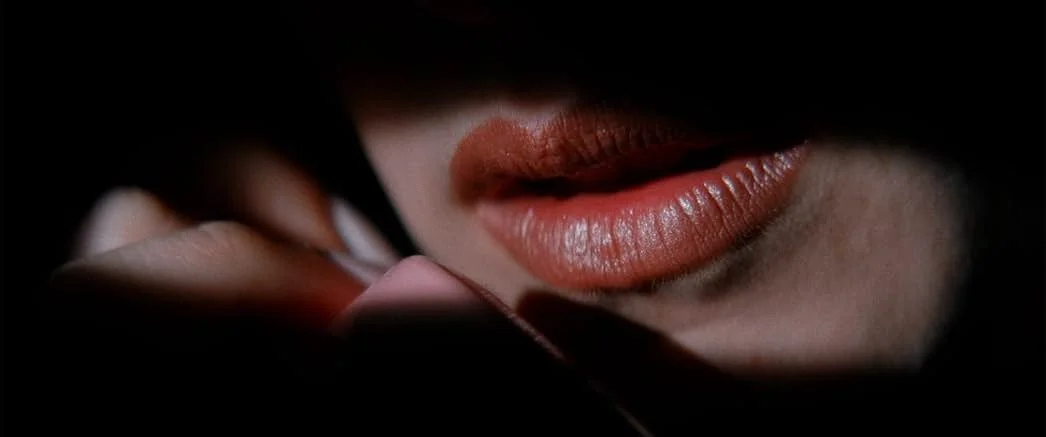
Lost Highway: Image From IMDB
The New Definition Of A Femme Fatale
The Neo-Noir Femme Fatale has expanded from a plot point to a lead character in her own right. Now these characters can lead movies like Mulholland Drive, Basic Instinct, and Bound, rather than being just a disastrous detour for the anti-hero male protagonist. Their sexuality has grown from beauty shots to nudity and sex giving them more power than ever over characters and the audience.
They can manipulate with greater flexibility, and have the ability to get away with their crimes now. They can be victims or perpetrators. Can help himself, or use a male counterpart. The choice is theirs. They’ve have grown more complex, allowing the narrative and action to grow more complex with them.
I personally love the evolution of the role and find it fascinating. With the current crop of non-stop superhero movies the trend of Femme Fatales has stopped, or moved in the direction of films more like Atomic Blonde, but these characters are far too interesting to stay on the sidelines forever. There was always the fascination with them and their ability to break even the most manly of men, but thanks to Neo-Noir and directors like David Lynch, they can now be so much more, and will be as Neo-Noir continues to evolve.