Neo-Noir Case Study: The Morality of L.A Confidential
*Will contain Spoilers.
LA Confidential: Image From IMDB
Introduction To L.A Confidential
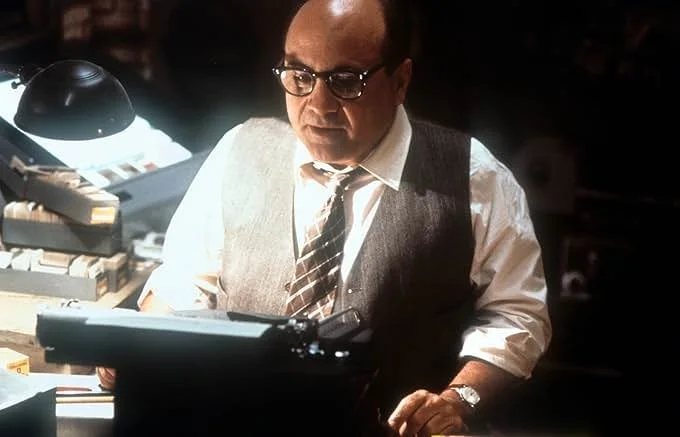
From the moment Danny DeVito’s Sid Hudgens begins this sordid tale we are transported into the corrupted world of 50’s L.A. But, despite the time and setting, this isn’t Film Noir, it’s Neo-Noir. The shadows and darkness have been replaced by sunny streets and palm trees, but there’s still nothing safe and comforting about them. The black and white has morphed into colour, but the complicated hard boiled detective’s are still on the case, and the Femme Fatale will still be their downfall.
L.A Confidential is more related to its historic origins than most Neo-Noir’s but this movie is a prime example of what could have been achieved back in the 50’s within the genre without the strict Hay’s Code. It’s Noir, but with all the sex and violence visibly inserted onscreen. It still has bad people doing bad things, but they might not necessarily suffer the karma they once would have been obligated to receive. The anti-heroes voice-over has been replaced by modern story telling techniques like the aforementioned Hudgen’s telling us what’s ‘off the record, on the Q.T, and very hush hush.’ It’s Noir, but not as we knew it.
The hard-boiled detective’s have multiplied, and each has their own morality tale. The hard ass captain is no longer trying to keep the hero on the straight and narrow, and instead is now part of the problem. The police aren’t the force of good. More disillusioned men equals more opportunity for the Femme Fatale to influence those around her. Less restrictions mean more debauchery, and more modern story telling.
I consider L.A. Confidential a perfect Neo-Noir with how it presents its archetypical characters, morality tales, L.A Atmosphere, and aesthetic. It’s updated for a post 70s film audience that expects and is given more. At the heart of the excess of L.A Confidential is the individual trails of the three main characters. Each character has a test to pass, with their goals and lessons interwoven into the films strong narrative and themes rather than just an interesting character quirk.
LA Confidential: Image From IMDB
The Morality Tales of Our Neo Noir Anti-Heroes
Ed Exley
Guy Pearce’s Ed Exley wants to be by-the-book, while also harbouring ambitions of quickly climbing the ranks of the police force. A politician disguised as a detective. But can you be both? His Captain Dudley Smith (played wonderfully by James Cromwell) wants to know if Ed is detective material. He asks him could he plant evidence to get the conviction he knows is right? Beat a confession out of someone he knows to be guilty? Shoot a criminal in the back if he has too?
If not, he doesn’t believe the young upstart will make it, especially as he’s already alienating his more aggressive old-school colleagues. Ed insists he doesn’t need to do things the way Dudley and his own dad did back in the day. That he can make a difference the right way. The gauntlet is laid out. The noble challenge accepted.
As the story unfolds Ed finds three men guilty of a crime they didn’t commit, evidence was planted. It wasn’t planted by Ed, but does it matter when the men end up dead. Later he turns a blind eye on Russell Crowe’s ‘Bud White’ beating a confession out of a high ranking lawyer. He even jokes about the good cop bad cop trope. Then, during the climatic gunfight, he shoots Dudley in the back, and gets a fucking medal for it.
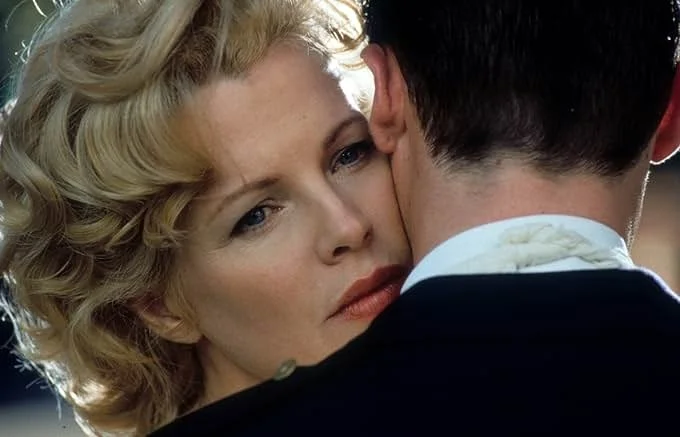
Ed tries to justify his actions to Lynn (Kim Basinger) bragging that he’s using them as much as the corrupt system is using him, but deep down he must know the truth. He started the movie with good intentions and integrity. Finished it with a medal for doing everything he swore he wouldn’t do… and he’s the hero of this modern Neo-Noir.
Bud White
Bud White isn’t the goody-two-shoes that Ed claimed to be. He’s a vicious animal from the get go. The muscle. He will beat a confession out of you and sleep like a baby afterwards. Hell, he’ll beat you up at any point if you give him even half a reason. I can’t remember him arresting or even questioning a single person without laying a hand on him.
However, Bud’s not corrupt in the same sense as the other officers around him, he has code. He is a protector of abused woman, stemming back from the days of his abusive father who beat his mum. If a woman’s in trouble, or even just appears to be in some kind of peril, Bud will save them whether they ask for his help or not. That’s who he is.
But, what about when the woman he loves fucks him over? Sleeps with Exley of all people. Can Bud uphold his moral superiority with a broken heart? When he feels humiliated as he flicks though the photos of them together? Men like Bud White don’t do humiliation.
After confronting Lynn about sleeping with Ed, his arch nemesis at this point, Bud loses his shit. He beats the fuck out of Lynn leaving her face battered and bruised. For all his protection of woman, beating up anyone who harms then, at the first opportunity he turns into his abusive asshole father in similar fashion to how Ed did his. And like Ed, Bud is one of the so-called heroes of the story. That’s the power of Noir.
In accordance to the old rules however, unlike Ed, Bud isn’t rewarded for his misbehaviour. Harming criminals and shooting corruption in the back is one thing, beating on defenceless woman is something else entirely. Bud’s shot multiple times in the final shootout and while surviving, his future looks pretty grim by the end of the movie. He’s unable to talk and has a tube through the side of his shot face. He did get the girl, but he broke his code, so he had to pay the price.
Jack Vincennes
Jack Vincennes (Kevin Spacey) story is backwards compared to the other two detectives. He starts out as a smarmy asshole (Hollywood Jack) but grows a conscience along the way. Only, it’s to late. You are not absolved of all your sins just by regretting the last of them. Jack has played the game well: working on the cases he wants to, taking brides that advance his career, being an adviser on a TV show. But, when he’s involved in a young actors death he knows he has to change, and he really does try.
He’s determined to find the kids killer, make amends for his biggest wrong. He’s a detective, yet he put his own Hollywood career ahead of a young desperate actor who he helped force into a shitty situation. He does crack the case, but it costs him his own life. Is Hollywood Jack forgiven at the end, or was his death justice for all those he’s fucked over in the name of making a quick buck?
It’s a fascinating tale as Jack really was the only character to go the other way, which is against type on a Noir. Normally, the hero starts out in a somewhat high standing position and is then dragged into a world of corruption and unethical behaviour (normally because of a woman) Jack on the other hand tries to become a better person because of the death of a young guy. It’s the mirror of what normally happens, yet the end results is the same. Everyone is doomed in the Noir world.
Support
Supporting characters also had their own morality tales like when Sam overplayed his hand. Fucking over his only friend meant no-one was around to look out for him. By the time he’s killed it’s said they’ve ‘narrowed the list of suspects down to a thousand.’
Lynn, the Femme Fatale of the piece, screwed over Bud. He was the only man who saw the real her rather than the Veronica Lake lookalike she was in her hooker persona. Her betrayal meant she doomed herself. By the end of the movie Lynn ends up heading back home to be herself. Her Hollywood dreams over. Ironically only ever getting to pretend to be a star, rather than being one.
The morality within L.A Confidential is second to none. Each character perfectly fitting that Neo-Noir genre. All isolated in their own way. Ed from his peers. Bud from his partner. Jack from his Hollywood life. They are all corrupted. Tricked by a femme fatale, with a slight twist on the trope for Spacey’s Jack. They’re all suffocating in their oppressive environment: L.A and the LA police department. They solve the crime, work out the Mcguffin, but at great personal cost to each of them. All lose their principle along the way, or their lives. The LAPD itself plays as a Noir character. It preaches crime prevention, while at the same time trying to take over the crime business. It’s as corrupt as everyone in it. The sum of its parts.
LA Confidential: Image From IMDB
Final Thoughts on L.A Confidential
The atmosphere, aesthetic, sex and violence of the movie shows the evolution of the genre from Film Noir to Neo-Noir. L.A is about as sunny and colourful as you can get. Wide open compared to the normal urban landscape. Palm trees replacing endless drab houses or tall buildings. The action is quicker. The shootouts more violent and visceral. The language ashamedly harsher. Everything updated for a modern audience.
There is nudity throughout, and violence in nearly every scene. Very little of it is suggestive. No need to use your imagination here. We can show you Russell mercilessly beating that thug. Gang-banger’s getting shot. Woman getting beaten. A bloody diner. A horrific shootout where everyone and their mum gets shot… by our hero’s. The shootout at the motel looks more like something John Woo would direct than Billy Wilder or John Huston. Curtis Hanson got to play with a ready establish genre, but without any of the restriction. The best of both worlds…
… and that’s ultimately what L.A Confidential is for me. It’s the best of both worlds. The connecting tissue between Film Noir and modern Neo-Noir. It shares it place with Chinatown in bridging that gap, and to a lesser extent as it’s not a period piece To Live and Die in L.A.
L.A Confidential gets to tell a classic noir tale of corruption. Of a detective trying to do the right thing only to do all the wrong things. Of a Femme Fatale leading men astray while they chase the Mcguffin (in this case a fuck ton of drugs, although the film is more focused on the diner murder case) It uses it’s environment and camera work to enhance the tale, but gets to do so in glorious Technicolor and within the City of Angels.
All the story beats are there, but they feel fresh. New. Updated. It’s Noir, only nastier.
It really is a fantastic movie, and the perfect setting to explore modern morality tales.
Stephen